
- Longevity in Italy: a disclosed secret
- Blue Zones: longevity, genes and dietary habits
- Extraordinary longevity in Sardinia: secrets to live beyond the Italian average
- Oldest Italian tree: The monumental olive-oil tree in Sardinia.
- Capital city of Sardinia: Cagliari, a treasure to discover

Italy is widely known as Country rich of historical and cultural heritage, but it is also well known for its cuisine, and acknowledged as the first country in the world for its people’s health, according to Bloomberg investigation (Italy’s Struggling Economy Has World’s Healthiest People, March, 20th, 2017).
“The high-heeled boot surrounded by five seas is ranked the healthiest country on Earth in the Bloomberg Global Health Index of 163 countries. A baby born in Italy can expect to live to be an octogenarian. But 2,800 miles south in Sierra Leone, the average newborn will die by 52”.
Among the dietary habits of its people blessed by extraordinary longevity, Italians show a common factor: large utilization of extra virgin olive oil as part of the diet for a healthy life.
“Then there is the diet, rich in vegetables and drizzled with extra virgin olive oil. Adam Drewnowski, director of the Center for Public Health Nutrition at the University of Washington, has written about the importance of consumers having access to fresh produce, fruit, lean meats and fish”.
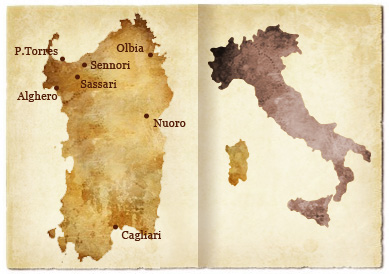
Blue Zones: longevity, genes and dietary habits
The extra virgin olive oil as one of the ingredients for longevity, which abundant use is spread in the blu zones. The blu zone is a term for the National Geographic project (Here Are the Secrets to a Long and Healthy Life, April, 12th 2015), “first and foremost, but it’s been loosely used to describe parts of the world where people live the longest. More specifically, areas where we have a demographically confirmed, geographically defined, area where people are either reaching age 100 at extraordinary rates, have the highest life expectancy, or the lowest rate of middle age mortality”.
The project has found out that “Residents of Okinawa, Sardinia, and Loma Linda, California, live longer, healthier lives than just about anyone else on Earth”, and has tried to investigate on “The Secrets of Long Life”.
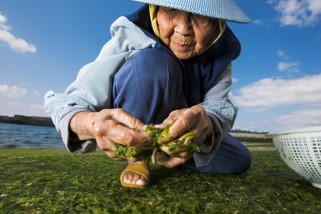
“Funded in part by the U.S. National Institute on Aging, scientists have focused on several regions where people live significantly longer. In Sardinia, Italy, one team of demographers found a hot spot of longevity in mountain villages where men reach age 100 at an amazing rate. On the islands of Okinawa, Japan, another team examined a group that is among the longest lived on Earth. And in Loma Linda, California, researchers studied a group of Seventh-day Adventists who rank among America’s longevity all-stars. Residents of these three places produce a high rate of centenarians, suffer a fraction of the diseases that commonly kill people in other parts of the developed world, and enjoy more healthy years of life. In sum, they offer three sets of “best practices” to emulate. The rest is up to you”.
Extraordinary longevity in Sardinia: secretes to live beyond the Italian average
The Italian island called Sardinia, is a blu zone studied by the National Geographic project which indicates Sardinians as first ethnic group for longevity, even before Okinawans (Blue Zone: Sardinia’s Secrets of Long Life, October, 28th, 2011).
“In a cluster of villages in the mountains of central Sardinia, residents enjoy extraordinary longevity, particularly among males. Have genetics and lifestyle played a central role? Dan Buettner travelled to the Italian island to learn what makes Sardinians—especially those in the central region of Barbagia—some of the longest-lived people in the world” (The National Geographic, The Secrets of Long Life, November, 2005).
One of the questions the project has tried to give an answer is: “What gives the people of central Sardinia extraordinary longevity?”.
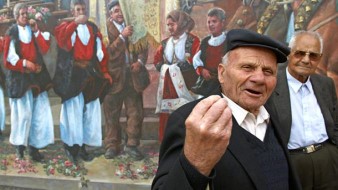
In Sardinia, “men pass a mural depicting a village procession. By keeping active, many men stay healthy longer. The unique geographic properties of central Sardinia—rocky, sun-beaten terrain not suited for large-scale farming—meant that over the centuries, shepherding offered the best profession. Walking five miles or more a day as Sardinian shepherds do provides cardiovascular benefits and has a positive effect on muscle and bone metabolism without the joint-pounding of running marathons or triathlons.
But a long healthy life is no accident, says in this study Dan Buettner: “it begins with good genes, but it also depends on good habits. If you adopt the right lifestyle, experts say, chances are you may live up to a decade longer. So what’s the formula for success? In recent years researchers have fanned out across the globe to find the secrets to long life.
As per Sardinians, “a community of 2,400 people, Silanus, is located on the sloping fringes of the Gennargentu Mountains in central Sardinia, where parched pastures erupt into granite peaks. In a cluster of villages in the heart of a region called the Blue Zone by demographers, 91 of the 17,865 people born between 1880 and 1900 have lived to their hundredth birthday—a rate more than twice as high as the average for Italy”.
“Why the extraordinary longevity here? Lifestyle is part of the answer. By 11 a.m. on this particular day, Tonino” (in the picture) “has already milked four cows, split half a cord of wood, slaughtered a calf, and walked four miles (6.4 kilometers) of pasture with his sheep. Now, taking the day’s first break, he gathers his grown children, grandson, and visitors around the kitchen table. Giovanna, his wife, a robust woman with quick, intelligent eyes, unties a handkerchief containing a paper-thin flatbread called carta da musica, fills our tumblers with red wine, and slices a round of homemade pecorino cheese with the thumping severity of a woman in charge. I do the work, admits Tonino, hooking Giovanna around the waist, <<my girl does the worrying>>.
“These Sardinians also benefit from their genetic history. About 11,000 years ago, hunter-gatherers from the Iberian Peninsula made their way eastward to Sardinia. When military powers such as the Phoenicians and Romans discovered Sardinia’s charms, the natives were forced to retreat deeper and deeper into the highlands. There they developed a wariness of foreigners and a reputation for banditry, kidnapping, and settling vendettas with the lesoria, the traditional Sardinian shepherd’s knife”.
“In their isolation native Sardinians became genetic incubators, amplifying certain traits over generations. Even today roughly 80 percent of them are directly related to the first Sardinians, says Paolo Francalacci of the University of Sassari. Somewhere in this genetic mix, he says, may lie a combination that favors longevity”.
“Family’s diet is another factor. It’s loaded with homegrown fruits and vegetables such as zucchini, eggplant, tomatoes, and fava beans that may reduce the risk of heart disease and colon cancer. Also on the table: dairy products such as milk from grass-fed sheep and pecorino cheese, which, like fish, contribute protein and omega-3 fatty acids. Tonino still makes wine from his small vineyard of Cannonau grapes, which in this mountainous part of Sardinia contain two to three times as much of a component found in other wines that may prevent cardiovascular disease”.
Oldest Italian tree: The monumental olive-oil tree in Sardinia.
A wild olive tree, over 4,000 years old, is one of the Italian national monument, and the olive oil of the Horreum Ltd. comes only from Sardinian old cultivar called Bosana and Semidana, traditionally from the island.
“The oldest tree in Italy is over 4,000 years old and is located in Sardinia, in the municipality of Luras in the province of Olbia Tempio. It is the grandfather of all olive trees: it is in fact an Olea europaea, the species from which oil-derived varieties derive. In Sardinia they call it the Patriarch or S’Ozzastru (that is, the Olivastre) and, according to various experts, is also one of the oldest in Europe” (The National Geographic, Which one is the Italian oldest tree?, March, 17th, 2017).
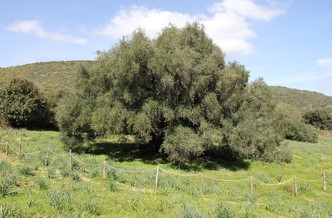
To have an idea of the giant size of this tree, which has been declared a Natural Monument since 1991, it is enough to say that the circumference of the trunk is about 11 meters and the diameter of the hair is 21 and 14 is high. Sculpted by Knots, small and large cavities, the Patriarch really looks like an old essay. Marked for years, but with roots still well planted in a land where ancient trees still survive. In the locality of Santo Baltolu di Carana, on the shores of Lake Liscia, other millennia are company to S’Ozzastru.
A few meters away, for example, there is another olive tree of about 2000 years. It is very ancient for us, a young man for the Patriarch.
It was the Italian Ministry of Agricultural and Forestry Policies to recognize the primacy of Sardinian olive. The same Ministry is carrying out the census of the monumental trees of Italy. Foreseen by Law 10/2013, the one that established the National Tree Day every November 21, the census aims to build a database accessible to everyone and navigable on map. The trees identified are protected by the same law of 2013 and, for those considered landscaped goods, will trigger double protection”.
Capital city of Sardinia: Cagliari, a treasure to discover
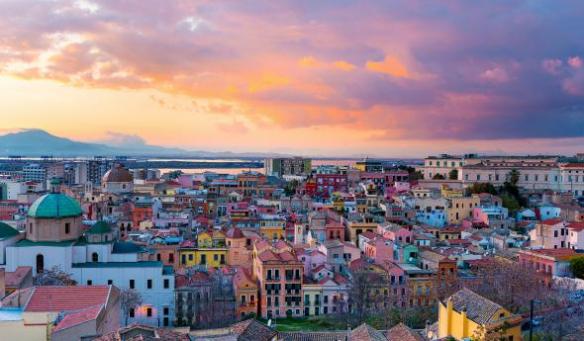
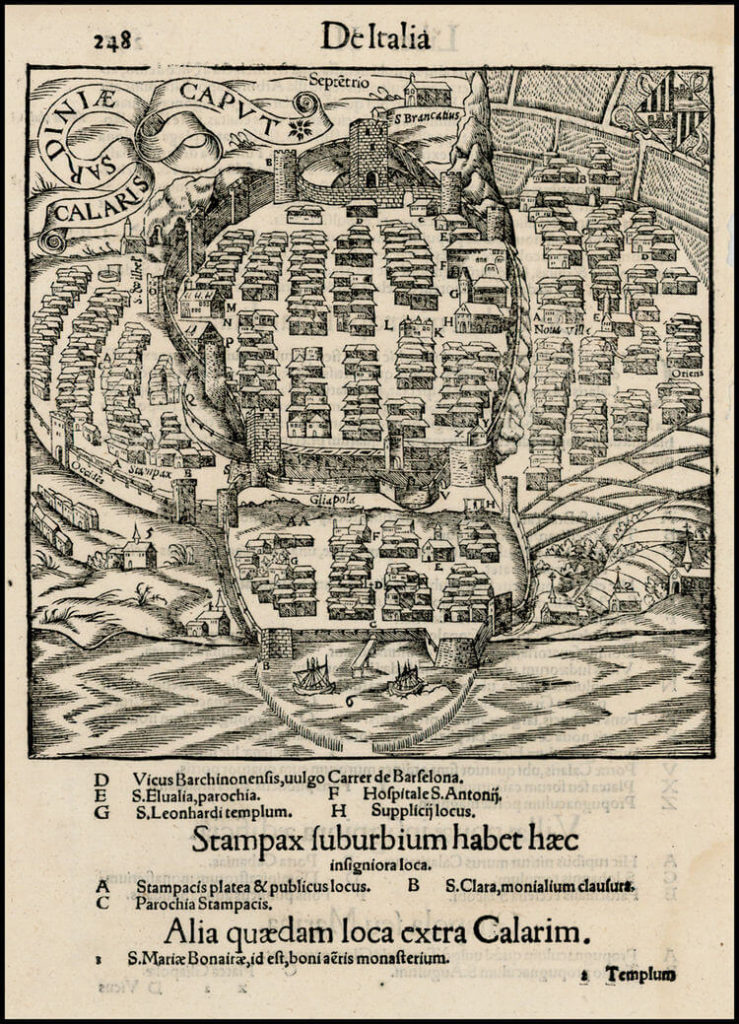
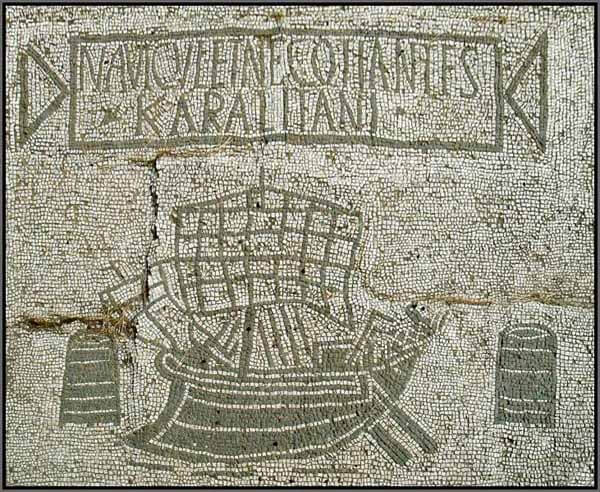
The National Geographic indicates Cagliari, the capital city of Sardinia, where our headquarters are based, as an underrated destination, and a must see. (The National Geographic, Underrated Mediterranean Destinations to Visit Right Now, March, 29th, 2017). Our old traditions and hidden destinations of our land have contributed to preserve its beauty and its deep-rooted heritage, in culture, food and traditions: A further reason to come and visit our factory and spend time with us.
“On the Italian island of Sardinia, Cagliari is divided into two. The newer section of the city exists at sea level, while the older Castello Quarter sits atop a hill that’s accessible by a series of zig-zagged ramps or steep stairs.
Click to enlarge
Down at the marina, walk up the boulevard-like Largo Carlo Felice to Caffe Svizzero for a cappuccino at the counter amongst wrought iron chandeliers and towering stone archways straight out of The Phantom of the Opera. Follow up the caffeine kick with a sugar high next-door at Originis. This cioccolateria and pasticceria tempts with treats like strawberry and Bavarian cream-filled hearts, cakes with praline and orange jam, and, somewhat surprisingly, chocolates shaped like life-size wrenches, bolts, and hammers.
A few blocks north, Largo Carlo Felice intersects with the pedestrian-only street of Via Giuseppe Manno. The shops here are mostly Italian chains, but the end of the road is dominated by the Bastione di Saint Remy, a limestone arched gateway to the Castello Quarter. The building’s double staircase leads to a palm tree-lined terrace with city and harbor views, as well as Cagliari’s medieval side of town. Constructed 800 years ago, the streets in the Castello Quarter are so narrow that they remain shaded even when the sun is directly above. You’ll find plenty of dark antique shops to duck into, peaceful piazzas, and the Romanesque Cattedrale di Cagliari with ornate marblework.
Tip: Nature lovers should head to Parco Molentargius Saline, protected wetlands that are home to flocks of flamingoes and other aquatic birds. The site is only a 10 to 15-minute drive from the city”.
Click to enlarge
Click to enlarge
